Showing posts with label Compilation. Show all posts

Saturday, November 5, 2011

Compilation! "Tom Waits - Wasted and Wounded"


TOM WAITS
WASTED AND WOUNDED

So Tom Waits has a new album out. Did you know? Oh, come on. Of course you know. For such a proudly 'non-commercial' artist, the proudly 'non-commercial' post-punk record label he currently calls home has certainly pulled out all the stops on marketing this one. And why? Does that mean they're expecting to turn a mighty profit from Tom Waits? There's certainly not much in almost forty years of professional work by this artist that would indicate such a thing is likely.

Jesus. Can it really be forty years? Yes, it can; Waits's début Closing Time came out in 1973, a remarkably long time ago now. So he must have a glut of retrospective compilations to his name, then, right? Well... no, as it happens. He's been compiled, yes, in a haphazard way down the years. But there's never been a compilation that spans his entire recorded output across the three record labels he's worked with, meaning there's never been a single compilation that looks back at more than a single decade or so of his work (with the sole exception of the odds-and-sods compilation Orphans, which is not at all what we're talking about here.

Apart from the whole 'who would buy it?' angle, I can kind of guess why this is. The three 'eras' of Tom Waits's career correspond not merely to record label affiliation but also to decade and to approximate musical genre. This 'Elektra Tom Waits' is seen as almost a different beast altogether to 'Island Tom Waits'. And 'Anti Tom Waits' serves as a kind of 'footnote' to the other two, this despite being the longest and most commercially successful of the three eras.

So I'm giving it a try. After all, the sonic templates may differ, the voice may regress year by year, but everything here is very clearly a singular vision, the work of one artist whose superficial ugliness belies a greater understanding and appreciation of beauty than almost anyone else out there. The nuts and bolts are this: an artist such as Tom Waits could never have a 'greatest hits' collection, but I've attempted both a subjective 'best of' and, in addition to that, a kind of down-the-years 'introduction' featuring his best-known songs. In many cases this means his best-known compositions, which might perhaps have been made famous after being covered by someone else. Though Waits himself has indulged in a handful of covers down the years, I've passed them over in favour of an all-original collection.

I make no attempt to dig through drawers and pull out curios. These are all 'album versions', taken from the standard issue versions of his main body of work. I tried to give each era approximately equal weight (and in fact if you consider the transitional soundtrack to One From the Heart as an 'Island era release', then I've included exactly twelve tracks from each of the three eras), but I didn't attempt to take from every album in his oeuvre and didn't worry about being overly well-rounded in stylistic range: I appear to have a very pronounced preference for the slower material, and my overall collection is noticeably slow in tempo.

Having said that, though, the album is more than adequately eclectic. So how to arrange it? Approaching the material in chronological order does little to 'integrate' the three eras - instead it presents three distinct 'greatest hits' collections stuck together on two CDs. And yet a purposefully mix-and-match approach would merely highlight the discrepancy between the piano-and-strings 'lounge lizard' early era and the rougher, more 'extreme' avant garde 1980s material. I actually spent a good long time working out a tracklist that went from era-to-era not in a jump-cut fashion but in a 'flowing' way, with mini-sets united by mood. In addition, there's a conscious attempt to frontload the package with those best-known tracks that the 'average consumer', if they know anything at all about Waits, is most likely to know.

In discussing inclusions, however, I'll be taking a chronological approach.

Note: in addition to a full tracklisting complete with original album cover and release details, I've included an embedded YouTube window to allow listening. So you can listen to this compilation in its entirety, but 36 embedded YouTube windows is a horrible strain on most browsers. To that end, I've hidden each CD tracklisting behind a 'spoiler tag'. Click on each CD in turn to hear its contents, and be warned that your browser might run a bit slow at first when you do so.
» Click here for the tracklisting of CD1, with embedded YouTube links. «

» Click here for the tracklisting of CD2, with embedded YouTube links. «


NOTES


Waits's first 'proper' album was Closing Time in 1973, on David Geffen's Elektra Records, home of the California singer-songwriter, something the not-very-gravelly artist certainly was at this point. I've taken three tracks from this user-friendly disc, the well-known 'Ol' 55', its neighbour 'I Hope That I Don't Fall in Love With You' and the lesser-known gorgeous piano ballad 'Martha'. Demos recorded before this first major release and collected on 'Early Years' compilations are overlooked here for the reason that Waits himself doesn't appear to approve of their release. And if someone who embraces the ugly and the incidental as much as Waits doesn't want these tracks seen as part of his body of work, well we ought to respect that.

The 'last call' motif of that début album's title presents us with the key to Waits's 1970s output: the bar. Or perhaps the 'lounge' - Waits himself was a heavy drinker during these years, which no doubt contributed to the deterioration of his voice but also to the establishment of his main theme: bar culture, and the lives of those who populate them. The Heart of Saturday Night, Waits's 1974 follow-up, aims for a touch of vérité in its world-weary title track '(Looking for) The Heart of Saturday Night', while 'Shiver Me Timbers' maintains the confessional tone of the début. Both, it goes without saying, are gorgeous. A double-length follow-up recorded 'live' in a studio-cum-nightclub furthers the barfly theme, though I've taken nothing from it for inclusion here.

Small Change, from 1976, remains in all probability the peak of Waits's artistic accomplishment. 'Tom Traubert's Blues' may or may not be his best-known song, but all these years later it remains the single most effective introduction to the man, his most jaw-droppingly touching recording and in all likelihood his meisterwerk. I let it open the collection, a well-earned accolade for a truly incredible piece. 'Invitation to the Blues' similarly starts off my second disc, while for me the slightly-too-clever 'The Piano Has Been Drinking (Not Me)' might be a step down in quality, though I'm clearly a minority here as regards another of Waits's 'signature pieces'.

1977's Foreign Affairs, the follow-up, is perhaps less notable, though I've found room for 'I Never Talk to Strangers', a highly evocative duet with Bette Midler taken straight out of a musical stage production that exists only in the minds of listeners. Released a year later, Blue Valentine features the spare guitar-only almost-title-track 'Blue Valentines' in addition to 'Romeo is Bleeding', one of only two spoken-word hipster epics that I've included. Heartattack and Vine, from 1980, would prove to be Waits's last album for Elektra, amid whisperings that Waits had lost it creatively and was content to coast along with a predictable formula. I find that hard to believe, frankly, and 'Jersey Girl', my final Elektra-era inclusion, is one of those classics that mine such a rare beauty that it seems ridiculous to grumble about sonic diversity.

Homeless between labels, Waits recorded a soundtrack on CBS for a Francis Ford Coppola film called One from the Heart, with Crystal Gayle as foil for a series of beauty-and-the-beast duets. From the 1982 release, I've included the opening track, a medley of three different compositions that carries a particularly cinematic mood, even while tied down to the traditional 1970s instrumentation Waits was inches away from shucking off, permanently. To give its name in full: 'Opening Montage (Tom's Piano Intro / Once Upon a Town / The Wages of Love)'.

Swordfishtrombones was not only Waits's first album for major/minor Island Records. It was also his first proper album of the 1980s (1983, to be precise) and the first of a trilogy that took up most of that decade. It was also his first 'avant garde' piece, a collection of tiny compositions buried beneath junkyard percussion and non-rock instrumentation. Weird, yes. An acquired taste, yes. But worth the effort? Yes, absolutely. From this second début I've taken the confrontational '16 Shells from a Thirty-Ought Six' and the jokey two-minute 'poetry reading' 'Frank's Wild Years'.

Rain Dogs was the follow-up two years later, in the same vein but in my eyes even better, with the Rod Stewart-covered pop evergreen 'Downtown Train' alongside the beautiful ballad 'Time' as two of fully nineteen tracks on a single vinyl album. The 'trilogy' wound up with 1987's Franks Wild Years, home to the much-covered 'Temptation' and 'Way Down in the Hole', which in later years would serve as theme song to an HBO show called The Wire. The album also contained two versions of one of Waits's most beautiful-ever songs. 'Innocent When You Dream (78)' is the second, album-concluding rendition, done up like an old vinyl recording but still timelessly gorgeous.

Another live album I've overlooked follows, and then Night on Earth, a 1992 soundtrack to a Jim Jarmusch film. From it I've taken the relatively brief 'Back in the Good Old World (Gypsy)'. The same year saw Waits's most heavily promoted Island-era release, Bone Machine, a well-received song collection from which I've taken the single 'Goin' Out West' and the much-covered 'I Don't Wanna Grow Up', two songs that hide their genuine feelings behind highly unconventional (i.e. 'weird') instrumentation, such as has become Waits's signature sound. 1993's The Black Rider, a studio version of a musical stage play, would be Waits's last release for six years and his last ever on Island. I've taken the atypically baroque 'The Briar and the Rose' from it.

It wouldn't be until 1999 that Tom Waits released a new album, on Bad Religion's Epitaph Records, or rather their Anti subsidiary. Defiantly indie at last, Waits put out Mule Variations, a critically-lauded album from which I've taken the midtempo ballad 'Hold On' and the lengthy blues song 'Get Behind the Mule' - in each case the instrumentation is just as rough and ragged as in the Island era, but the template is less self-consciously 'experimental'; the instrumentation strictly in service of these out-of-time songs.

Waits followed his 'comeback' in 2002 with two simultaneously-released albums that were in fact, like The Black Rider, studio recordings of stage projects, dating as far back a decade before. From Blood Money we've taken the 'single' 'God's Away on Business', which returns a bit to the Bone Machine Island era, and the softer 'Coney Island Baby', which could have been recorded in the 17th century, if they had had recording media at the time. From Alice, the other 2002 collection, I've taken two gorgeous ornate and terribly sad ballads, 'Alice' and 'Poor Edward', desolate and desperate songs of a rare beauty.

2004 saw Real Gone, a surprisingly guitar-based collection. From it, I've taken the delicate ballad 'Dead and Lovely', and a rather surprising seven-minute political piece called 'Day After Tomorrow', a touching heartfelt piece from an artist whose concerns have tended to be interpersonal rather than international. A 3CD 'grab-bag' collection of older pieces from here and there mixed with new recordings, Orphans: Brawlers, Bawlers and Bastards was a surprising commercial success, and from its 56 tracks I've taken only two soundtrack contributions, 'Little Drop of Poison' from Shrek 2, and 'Long Way Home' from Big Bad Love.

Which takes us to... well, to today, after skipping a third live album (one per era), and that soon-to-be commercial breakthrough Bad as Me. So far I haven't fallen in love with it, but like every other Anti release it gets an allotment of two tracks, the title track 'Bad As Me' and the tiny little 'Get Lost' - something that Waits seems entirely unable to do, even as he's spent decades now wandering without a map, far removed from convention. That he's managed never to get lost all these years despite trying seemingly so hard explains how Anti has managed to launch such a pervasive advertising campaign behind him some forty years on from his début.

Wednesday, June 22, 2011

Compilation!: Malcolm McLaren: "The Bad, the Good, the Simply Boring"


MALCOLM McLAREN
THE BAD, THE GOOD, THE SIMPLY BORING

So I'm trying a new thing here. I love making compilations - you know, mixtapes, playlists, etc. The problem is that I'd love to be able to include them here to be heard, and that's just not very easy, legally.

Here's an attempt at a way around: a compilation made up of songs that exist on YouTube, where I link to the uploaded YouTube files. I'm not uploading them, no harm no foul? I think... I hope. I don't know.

First kick at the can is the recently-deceased 'imp' Malcolm McLaren, more famous perhaps for his managerial role and for his dabbling in politics than what he's produced as a musician - largely because he very clearly couldn't care less about having a musical 'career' and was content to periodically release music whenever he felt like it - in pretty much any ol' genre he preferred, with a wild variance in quality.

It turns out he does have enough 'greatest hits' for a full 70-minute CD, and one that's really quite listenably as it flits from genre to genre. This material probably belongs to a dozen different record labels, which would make it pretty difficult to have a physical form as a CD you can buy in HMV. And I'm not too sure who would buy a CD of Malcolm McLaren's greatest hits. Which is a pity, since it's quite a good listen. Don't take my word for it listen for yourself. Click on each song below and a window will open with the YouTube viewing screen for the song in question.

» #1 - Buffalo Gals (3:43) «

» #2 - Aria on Air (4:09) «

» #3 - About Her (4:50) «

» #4 - Double Dutch (3:50) «

» #5 - Deep in Vogue (4:03) «

» #6 - Madame Butterfly (6:23) «

» #7 - Revenge of the Flowers (Todd's extended mix) (5:07) «

» #8 - Magic's Back (4:35) «

» #9 - Carry On Columbus (3:49) «

» #10 - Eiffel Tower (3:44) «

» #11 - Something's Jumpin' in Your Shirt (4:53) «

» #12 - Chinatown (4:10) «

» #13 - Paris Paris (5:24) «

» #14 - Carmen (4:57) «

» #15 - Waltz Darling (4:29) «

» #16 - Operaa House! (5:54) «

» #17 - Duck for the Oyster (2:55) «

1983's Duck Rock was Malcolm McLaren's first kick at the can as a solo artist - and to a real extent his greatest accomplishment, not just because of legendary early hip-hop/square-dance 'crossover' Buffalo Gals (track 1) but also because of the amazing African-sourced jumprope song Double Dutch (track 4) - two brilliant songs the equal of anything else out there. Duck for the Oyster (track 17) is a silly little take on straight square dance music - a joke, really, but good fun. McLaren followed his début up with the modern-opera concept of Fans (1984), the source here of the magnificent Madame Butterfly (track 6) and Carmen (track 14). This 'situationist' reimagining of premodern music in a modern environment is the signature McLaren trick, something he'll return to again and again throughout his career. Swamp Thing, from 1985, is his last 'early years' release, and it's from this that we get McLaren's reworking of a Bow Wow Wow track, Eiffel Tower (track 10), sung by a pre-fame Neneh Cherry.

In 1989, McLaren released Waltz Darling, perhaps his hast attempt at 'chart success' the conventional way. It's a lush album, a perfect soundtrack to Paris fashion week, and we take three tracks from it: Deep in Vogue (track 5), Something's Jumpin' In Your Shirt (track 11) and Waltz Darling (track 15). The next year saw Round the Outside, Round the Outside, a kind of return to past hip-hop glories, but the lead single Operaa House! (track 16), a track less awesome than its title suggests it should be, was completely outshone by its b-side (and significant source material) Aria on Air (track 2), perhaps the most recognisable song on this disc due to its usage in British Airways marketing.

At this point, McLaren seems to have realised that conventional albums were not the way to go. The next two tracks we have here are both from soundtracks: 1991's Magic's Back (track 8), featuring Alison Limerick, from 'The Ghosts of Oxford Street' and 1992's Carry On Columbus (track 9), from the 'Carry On' film of the same name and released under the alias Fantastic Planet.One last 'normal CD' release in 1994 was called Paris, and featured Paris Paris (track 13) with Catherine Deneuve, and also the original version of the song that I include here in a Todd Terry remix: Revenge of the Flowers (Todd's extended mix) (track 7), featuring Françoise Hardy.

A few random releases here and there followed before McLaren showed up, mysteriously, on the 'Kill Bill Volume 2' soundtrack in 2004 with the odd version of the Zombies' 'She's Not There', retitled About Her (track 3), which also showed up a year later on a rare CD Tranquilize, from which I've also taken the very strage mashup Chinatown (track 12), a fittingly bizarre 'final song' from the man, a track which was never a single but which I felt added more than a little to this most curious of compilations. Available here for your listening pleasure, until YouTube takes them down...

Saturday, June 4, 2011

Wu-Gambinos: The Second Album

This month, I might cover the Wu-Tang Clan's second album, "Forever" on my Better as a Single blog. If I do (and I make no guarantees), I'll probably at some point point out that the Wu-Tang Clan would have come up with a much stranger follow-up to their début if they had chosen the cream of the crop from the first bunch of solo releases, Tical, Return to the 36 Chambers: the Dirty Version, Only Built 4 Cuban Linx..., Liquid Swords and Ironman, and assembled them together on a single CD.

So I decided to give that very thing a try. My compilation is not strictly 'the very best' - it only includes tracks produced by the RZA, and while focusing on the best and most commercially successful still attempts to maximise input by Wu-Tang members and minimise input by special guests. So here's a rough draft: so far, so good. I've listened to it, and the result is a brilliant album, sadly much better than the one that did get released.

All songs produced by the RZA. Non-Clan special guests are listed in italics.
  1. Liquid Swords (4:31) — GZA, RZA
  2. Bring the Pain (3:09) — Method Man, Booster
  3. Wu-Gambinos (5:39) — Method Man, Raekwon,  RZA, Masta Killa, Ghostface Killah
  4. Snakes (5:26) — RZA, Masta Killa, Ol' Dirty Bastard, Killah Priest, Buddah Monk
  5. Cold World (5:31) — GZA, Inspectah Deck, Life
  6. Shimmy Shimmy Ya (2:41) — Ol' Dirty Bastard
  7. Winter Warz (4:40) — Raekwon, U-God, Ghostface Killah, Masta Killa, Cappadonna
  8. Duel of the Iron Mic (4:06) — Ol' Dirty Bastard, GZA, Masta Killa, Inspectah Deck
  9. Meth vs. Chef (3:36) — Method Man, Raekwon
  10. Shadowboxin' (3:30) — Method Man, GZA
  11. Criminology (3:47) — Ghostface Killah, Raekwon
  12. Mr. Sandman (3:37) — RZA, Inspectah Deck, Method Man, Street Thug, Carlton Fisk, Blue Raspberry
  13. Guillotine (Swordz) (4:22) — Inspectah Deck, Ghostface Killah, Raekwon, GZA
  14. Black Jesus (4:37) — Raekwon, Ghostface Killah, U-God, Popa Wu
  15. Ice Cream (4:13) — Method Man, Ghostface Killah, Raekwon, Cappadonna
  16. Cuttin' Headz (2:28) — Ol' Dirty Bastard, RZA
  17. Release Yo' Delf (4:15) — Method Man, Blue Raspberry
  18. All That I Got is You (5:21) — Ghostface Killah, Popa Wu, Mary J. Blige 
While this album winds up having more special guests than Wu-Tang members (if you don't count Cappadonna as an official member), it is remarkably rounded in terms of clan contributions: Method Man, Raekwon and Ghostface Killah appear on seven tracks apiece, the GZA and the RZA each get five credits, Ol' Dirty Bastard, Masta Killa and Inspectah Deck feature on four tracks each, and underachieving U-God (quite low-key on the début as well) racks in a mere two contributions.

Friday, March 18, 2011

Compilation! "The Smiths - The Songs That Saved Your Life"


THE SMITHS
THE SONGS THAT SAVED YOUR LIFE

I put this together largely as a response to The Sound of the Smiths, a rather hapless two-CD Smiths compilation that exists as a single-CD 'greatest hits' collection, no better or worse than any of the others, and a 'special edition' that adds a second disc, a rather random mix of vaguely 'rare' stuff and sundry tracks from here and there. It doesn't make that much sense, really. Which is a pity, because it'll probably be the last time The Smiths' legacy is exploited on the CD format...

Oh, who am I kidding? There'll be others. As long as humans have ears, Warners will periodically find new ways to repackage The Smiths' recorded output (and now that EMI has gone under and will probably be hoovered up by WB, Morrissey's too). The Smiths' legacy is so compact though - there are only eighty or so songs (many in different versions, it should be mentioned), but probably half of everything they recorded is 'essential'. I thought that if you put together two full CDs of Smiths material, you'd probably have 40 songs - in other words, more or less half of everything they ever did. What does that make it? Not a 'greatest hits' or an 'introduction'. Not the completed works either, though. So let's call it a 'restrospective'. Whatever you call it, it makes a great collection, even if it would, were it to actually exist, be just another cynical repackaging job. Still, in the interests of true cynicism, I've included three previously-unreleased 'alternate versions'. And a tacky badge.

CD ONE
  1. HAND IN GLOVE album version. (3:23) Produced by the Smiths, remixed by John Porter. From the Rough Trade album The Smiths, ROUGH61, February 1984.
  2. WHAT DIFFERENCE DOES IT MAKE? Peel Session version. (3:11) Produced by Roger Pusey. From the Rough Trade album Hatful of Hollow, ROUGH76, November 1984.
  3. REEL AROUND THE FOUNTAIN Troy Tate version. (6:05) Produced by Troy Tate. Previously unreleased.
  4. THIS NIGHT HAS OPENED MY EYES. (3:39) Produced by Roger Pusey. From the Rough Trade album Hatful of Hollow, ROUGH76, November 1984.
  5. BACK TO THE OLD HOUSE Peel Session version. (3:02)  Produced by Roger Pusey. From the Rough Trade album Hatful of Hollow, ROUGH76, November 1984.
  6. THIS CHARMING MAN. (2:42) Produced by John Porter.  From the Rough Trade single 'This Charming Man', RT136, October 1983.
  7. STILL ILL. (3:20) Produced by John Porter. From the Rough Trade album The Smiths, ROUGH61, February 1984.
  8. HEAVEN KNOWS I'M MISERABLE NOW. (3:34) Produced by John Porter. From the Rough Trade single 'Heaven Knows I'm Miserable Now', RT156, May 1984.
  9. GIRL AFRAID. (2:48) Produced by John Porter. From the Rough Trade 12" single 'Heaven Knows I'm Miserable Now', RTT156, May 1984.
  10. WILLIAM, IT WAS REALLY NOTHING. (2:09) Produced by John Porter. From the Rough Trade single 'William, It Was Really Nothing', RT166, August 1984.
  11. PLEASE PLEASE PLEASE LET ME GET WHAT I WANT. (1:51) Produced by John Porter. From the Rough Trade single 'William, It Was Really Nothing', RT166, August 1984.
  12. HOW SOON IS NOW? (6:44) Produced by John Porter. From the Rough Trade 12" single 'William, It Was Really Nothing', RTT166, August 1984.
  13. THE HEADMASTER RITUAL. (4:52) Produced by the Smiths. From the Rough Trade album Meat is Murder, ROUGH81, February 1985.
  14. NOWHERE FAST. (2:37) Produced by the Smiths. From the Rough Trade album Meat is Murder, ROUGH81, February 1985.
  15. RUSHOLME RUFFIANS. (4:20) Produced by the Smiths. From the Rough Trade album Meat is Murder, ROUGH81, February 1985.
  16. BARBARISM BEGINS AT HOME. (6:57) Produced by the Smiths. From the Rough Trade album Meat is Murder, ROUGH81, February 1985.
  17. THAT JOKE ISN'T FUNNY ANYMORE. (4:58) Produced by the Smiths. From the Rough Trade album Meat is Murder, ROUGH81, February 1985.
  18. SHAKESPEARE'S SISTER. (2:08) Produced by the Smiths. From the Rough Trade single 'Shakespeare's Sister', RT181, March 1985.
  19. STRETCH OUT AND WAIT alternate version. (2:45) Produced by the Smiths. From the Rough Trade album The World Won't Listen, ROUGH101, February 1987.
  20. THE BOY WITH THE THORN IN HIS SIDE album version. (3:17) Produced by Morrissey and Marr. From the Rough Trade album The Queen is Dead, ROUGH96, June 1986.

CD TWO
  1. RUBBER RING. (3:23) Produced by Morrissey and Marr. From the Rough Trade 12" single 'The Boy with the Thorn in his Side', RTT191, September 1985.
  2. ASLEEP. (4:10) Produced by Morrissey and Marr. From the Rough Trade single 'The Boy with the Thorn in his Side', RTT191, September 1985.
  3. BIGMOUTH STRIKES AGAIN. (3:14) Produced by Morrissey and Marr. From the Rough Trade single 'Bigmouth Strikes Again', RT192, May 1986.
  4. THERE IS A LIGHT THAT NEVER GOES OUT. (4:03) Produced by Morrissey and Marr. From the Rough Trade album The Queen is Dead, ROUGH96, June 1986.
  5. I KNOW IT'S OVER. (5:49) Produced by Morrissey and Marr. From the Rough Trade album The Queen is Dead, ROUGH96, June 1986.
  6. CEMETRY GATES. (2:41) Produced by Morrissey and Marr. From the Rough Trade album The Queen is Dead, ROUGH96, June 1986.
  7. THE QUEEN IS DEAD original unedited version. (7:30) Produced by Morrissey and Marr. Previously unreleased.
  8. PANIC. (2:21) Produced by John Porter. From the Rough Trade single 'Panic', RT193, July 1986.
  9. ASK album version. (3:15) Produced by John Porter, remixed by Steve Lillywhite. From the From the Rough Trade album The World Won't Listen, ROUGH101, February 1987.
  10. YOU JUST HAVEN'T EARNED IT YET, BABY. (3:32) Produced by John Porter. From the Rough Trade album The World Won't Listen, ROUGH101, February 1987.
  11. HALF A PERSON. (3:36) Produced by Morrissey, Johnny Marr and Stephen Street. From the Rough Trade single 'Shoplifters of the World Unite', RT195, January 1987.
  12. SHOPLIFTERS OF THE WORLD UNITE. (2:58) Produced by Johnny Marr. From the Rough Trade single 'Shoplifters of the World Unite', RT195, January 1987.
  13. IS IT REALLY SO STRANGE? (3:04) Produced by John Porter. From the Rough Trade single 'Sheila Take a Bow', RT196, April 1987.
  14. SHEILA TAKE A BOW. (2:41) Produced by Morrissey, Johnny Marr and Stephen Street. From the Rough Trade single 'Sheila Take a Bow', RT196, April 1987.
  15. GIRLFRIEND IN A COMA unreleased early take. (2:04) Produced by Johnny Marr, Morrissey and Stephen Street. Previously unreleased.
  16. PAINT A VULGAR PICTURE. (5:35) Produced by Johnny Marr, Morrissey and Stephen Street. From the Rough Trade album Strangeways, Here We Come, ROUGH106, September 1987.
  17. STOP ME IF YOU THINK YOU'VE HEARD THIS ONE BEFORE. (3:32) Produced by Johnny Marr, Morrissey and Stephen Street. From the Rough Trade album Strangeways, Here We Come, ROUGH106, September 1987.
  18. LAST NIGHT I DREAMT THAT SOMEBODY LOVED ME. (5:06) Produced by Johnny Marr, Morrissey and Stephen Street. From the Rough Trade album Strangeways, Here We Come, ROUGH106, September 1987.
  19. I WON'T SPARE YOU. (2:48) Produced by Johnny Marr, Morrissey and Stephen Street. From the Rough Trade album Strangeways, Here We Come, ROUGH106, September 1987.
  20. I KEEP MINE HIDDEN. (2:00) Produced by Grant Showbiz, remixed by Stephen Street. From the Rough Trade 12" single 'Girlfriend in a Coma', RTT197, August 1987.

NOTES

The Smiths only released four 'proper' albums. Combined, they only exceed the length of this compilation by a few minutes. But with the Smiths, the albums only told a small part of the story. Much of what matters most was scattered across singles, periodically collected in cheesy compilations. It wasn't even the non-album a-sides either - Smiths b-sides frequently numbered among their very best pieces of work.

This collection starts off relatively confusing: the first batch of Smiths songs were more or less recorded three times in full: with Troy Tate as producer in sessions for a scrapped first album, with John Porter for the ultimately released first album, and at a handful of sessions for the BBC. The first seven tracks here are a kind of 'greatest hits' of the early years. I break chronology here only by including the remixed 'album version' of Hand in Glove as the opening track, but I find it a more enjoyable listening experience to the muddled original single version. What Difference Does It Make? was a single, but I present it here in the BBC version, the earlier and now preferred version. For Reel Around the Fountain, I've turned to the unreleased Troy Tate version. Simon Goddard likes it best and I think I agree, though all three versions have their merits.

This Night Has Opened My Eyes and Back to the Old House are both from the BBC, as compiled on Hatful of Hollow. This Charming Man is the classic 'Manchester version'. Still Ill is the only song produced by John Porter for the début to make it to my collection.

We then get five single tracks: Heaven Knows I'm Miserable Now and its 12" b-side Girl Afraid, before history's greatest single in full: William, It Was Really Nothing, its b-side Please Please Please Let Me Get What I Want, and its 12" 'bonus track' How Soon is Now?, included in full here (there are no 'single edits' on this collection). That's followed by five of the nine tracks on Meat is Murder: The Headmaster Ritual, Nowhere Fast, Rusholme Ruffians, Barbarism Begins at Home (all seven minutes of it), and That Joke Isn't Funny Anymore, which was also a single.

Ending CD one with the album version of The Boy With the Thorn In His Side may not make that much sense, since otherwise disc one is devoted to The Smiths, Meat is Murder, and other tracks of the era, while disc two is devoted to The Queen is Dead, Strangeways, Here We Come, and contemporary tracks.

But the reason for my doing so is to start disc two with Rubber Ring, the b-side of 'The Boy with the Thorn in his Side' and the 'title track' of this collection. It's a great disc-starter, followed by Asleep, the other b-side from the same single. We then jump headlong into The Queen is Dead, their masterpiece, with fully six of its ten tracks. After 'The Boy...' on disc one, we also get Bigmouth Strikes Again, There is a Light That Never Goes Out, I Know it's Over, Cemetry Gates, and a previously-unreleased 'full-length' version of the title track The Queen is Dead.

We then get a big mess of single-only tracks. Both Panic and Ask were a-sides (I take the latter in an 'album version', which means the slightly longer version that features on compilations - it's not actually from any 'album' at all). You Just Haven't Earned It Yet, Baby would have been an a-side too, but it was dropped at the last minute, and wound up on The World Won't Listen later on. The amazing Half a Person would have been its b-side, but it wound up on the b-side of Shoplifters of the World Unite, a solo Johnny Marr production, instead. Is It Really So Strange? was recorded in the studio, but the only officially-released version, this one, is another BBC recording. It was the b-side of Sheila Take a Bow, the last of four consecutive between-album singles.

Girlfriend in a Coma was the first single from Strangeways, Here We Come. An early take was done in a rocksteady style, and that's the version I include here, both because it's intriguing and as a ruse to make the collection more, er, collectible. After that, we get four of its album-mates: Paint a Vulgar Picture, Stop Me If You Think You've Heard This One Before, Last Night I Dreamt that Somebody Loved Me and I Won't Share You. On the cusp of their estrangement from one another, this love song from Morrissey to Johnny Marr would have been a great place to finish. But despite Marr's loathing of the song, I Keep Mine Hidden, b-side to 'Girlfriend in a Coma' and the last original song they ever recorded, deserves its place here. Anyway, it's also, according to Simon Goddard, a song from Morrissey to Marr. So two messages from one half to the other half of one of popular music's best-ever songwriting partnerships.

Tuesday, February 22, 2011

Compilation! "Neil Young - Out of the Blue and Into the Black"


NEIL YOUNG
OUT OF THE BLUE AND INTO THE BLACK

Neil Young is probably the last person who should be responsible for maintaining the Neil Young legacy. A hatred of the CD format and a strange obsession with sonic fidelity has left the Neil Young faithful frustrated by endless delays and stubborness and has left the casual listener merely bored. I call his obsession with sonic fidelity 'strange' because, well, because this is Neil Young here, not Phil Spector, and how exacting do you need to be in reproducing each farting amp and each out-of-tune vocal?

Down the years, we've gotten Decade, a standard-setting 'boxed set in miniature', perfectly balancing the casual listener's hits with the fanatic's outtakes, Lucky Thirteen, an overview of the Geffen years so random that probly even the enigmatic mind of Neil Young couldn't make any sense of it, and finally in 2004, Greatest Hits, a soulless missed opportunity that reduced a great artist's seminal career to a randomised selection of Napster downloads. And, excepting a ridiculously overstuffed and glacially slow-to-appear 'Archives' boxed-set series, that's it. Outside of those three collections, there's no good way at all to get into the career of Neil Young, no way to straddle that by-now-massive gulf between casual listener and $300-boxed-set-purchasing obsessives.

The best way to compile Neil Young is so staring-you-in-the-face obvious that suits at Reprise Records must have thought of it but rejected it for some reason no more obvious than any other disappointment in Neil Young's career. Neil Young is considered an extremely eclectic artist, and certainly down the years he's dabbled in a huge range of genres, from doo-wop pastiche to horn-led Blues Brothers 'soul' music, from vocodored 'synth rock' to 30-minute feedback symphonies. yet the vast majority of Neil Young's work falls squarely in one of two categories: acoustic and pastoral or electric and crunchy. Quick, name a Neil Young song, any one. The chances that the song you've chosen falls quite squarely into one of those two categories are exceedingly high. The deviations from this M.O., though they are many, are not necessarily the 'core of the legacy' kind of material you'd want to hear on a 150-minute 2CD career distillation.

So here it is: a 2CD 'greatest hits' packaged sequenced not chronologically but according to instrumentation: one disc collecting the best of Neil Young's acoustic work down the years and one collecting the best of his electric work. I suppose they could be two seperately released CDs, but it seems to me that they work best as a two-CD set.

DISC ONE (ACOUSTIC)


1.Neil Young and Crazy Horse - Rust Never SleepsNEIL YOUNG AND CRAZY HORSE - MY MY, HEY HEY (OUT OF THE BLUE). (3:45) From the Reprise album Rust Never Sleeps, 1979.

2.Neil Young - HarvestNEIL YOUNG - HEART OF GOLD. (3:07) From the Reprise album Harvest, 1972.

3.Neil Young - Harvest MoonNEIL YOUNG - HARVEST MOON. (5:05) From the Reprise album Harvest Moon, 1992.

4.Neil Young - Prairie WindNEIL YOUNG - THE PAINTER. (4:36) From the Reprise album Prairie Wind, 2005.

5.CSNY - Deja VuCROSBY, STILLS, NASH AND YOUNG - HELPLESS. (3:32) From the Atlantic album Déjà vu, 1970.

6.Neil Young - After the Gold RushNEIL YOUNG - AFTER THE GOLD RUSH. (3:45) From the Reprise album After the Gold Rush, 1970.

7.Neil Young - Old WaysNEIL YOUNG AND WILLIE NELSON - ARE THERE ANY MORE REAL COWBOYS? (3:07) From the Geffen album Old Ways, 1985.

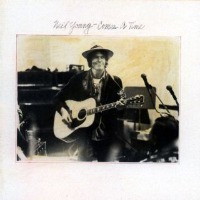
8.Neil Young - Comes a TimeNEIL YOUNG - COMES A TIME. (3:09) From the Reprise album Comes a Time, 1978.

9.Neil Young - After the Gold RushNEIL YOUNG - ONLY LOVE CAN BREAK YOUR HEART. (3:06) From the Reprise album After the Gold Rush, 1970.

10.Neil Young - After the Gold RushNEIL YOUNG - I BELIEVE IN YOU. (3:25) From the Reprise album After the Gold Rush, 1970.

11.Neil Young - Comes a TimeNEIL YOUNG AND CRAZY HORSE - LOOK OUT FOR MY LOVE. (4:05) From the Reprise album Comes a Time, 1978.

12.Neil Young - Harvest MoonNEIL YOUNG - UNKNOWN LEGEND. (4:33) From the Reprise album Harvest Moon, 1992.

13.Neil Young and Crazy Horse - Rust Never SleepsNEIL YOUNG AND CRAZY HORSE - POCAHONTAS. (3:23) From the Reprise album Rust Never Sleeps, 1979.

14.Neil Young - Hawks and DovesNEIL YOUNG - LITTLE WING. (2:15) From the Reprise album Hawks and Doves, 1980.

15.Neil Young - HarvestNEIL YOUNG - THE NEEDLE AND THE DAMAGE DONE. (2:03) From the Reprise album Harvest, 1972.

16.Neil Young - Comes a TimeNEIL YOUNG - LOTTA LOVE. (2:38) From the Reprise album Comes a Time, 1978.

17.Neil Young - HarvestNEIL YOUNG - OLD MAN. (3:24) From the Reprise album Harvest, 1972.

18.Neil Young - American Stars and BarsNEIL YOUNG - STAR OF BETHLEHEM. (2:42) From the Reprise album American Stars 'n Bars, 1977.

19.Neil Young - Prairie WindNEIL YOUNG - WHEN GOD MADE ME. (4:05) From the Reprise album Prairie Wind, 2005.

20.Neil Young - Le NoiseNEIL YOUNG - LOVE AND WAR. (5:37) From the Reprise album Le Noise, 2010.

21.Neil Young - FreedomNEIL YOUNG - ROCKIN' IN THE FREE WORLD acoustic version. (3:40) From the Reprise album Freedom, 1989.


DISC TWO (ELECTRIC)


1.Neil Young and Crazy Horse - Rust Never SleepsNEIL YOUNG AND CRAZY HORSE - HEY HEY, MY MY (INTO THE BLACK). (5:15) From the Reprise album Rust Never Sleeps, 1979.

2.Neil Young - American Stars and BarsNEIL YOUNG AND CRAZY HORSE - LIKE A HURRICANE. (8:20) From the Reprise album American Stars 'n Bars, 1977.

3.Buffalo Springfield - Buffalo Springfield AgainBUFFALO SPRINGFIELD - MR. SOUL. (2:50) Original version from the Atco album Buffalo Springfield Again, 1967.

4.Neil Young and Crazy Horse - Everybody Knows This is NowhereNEIL YOUNG AND CRAZY HORSE - CINNAMON GIRL. (3:02) From the Reprise album Everybody Knows This is Nowhere, 1969.

5.Neil Young and Crazy Horse - Rust Never SleepsNEIL YOUNG AND CRAZY HORSE - POWDERFINGER. (5:33) From the Reprise album Rust Never Sleeps, 1979.

6.Neil Young and Crazy Horse - Ragged GloryNEIL YOUNG AND CRAZY HORSE - FUCKIN' UP. (5:55) From the Reprise album Ragged Glory, 1990.

7.Neil Young - Le NoiseNEIL YOUNG - WALK WITH ME. (4:26) From the Reprise album Le Noise, 2010.

8.Neil Young - Tonight's The NightNEIL YOUNG - TONIGHT'S THE NIGHT (4:42) From the Reprise album Tonight's the Night, 1975.

9.Neil Young and Crazy Horse - Sleeps With AngelsNEIL YOUNG AND CRAZY HORSE - SLEEPS WITH ANGELS. (2:46) Original version from the Reprise album Sleeps With Angels, 1994.

10.Neil Young and Crazy Horse - Everybody Knows This is NowhereNEIL YOUNG AND CRAZY HORSE - DOWN BY THE RIVER. (9:19) From the Reprise album Everybody Knows This is Nowhere, 1969.

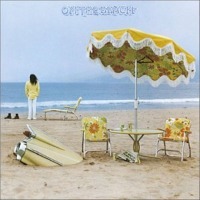
11.Neil Young - On the BeachNEIL YOUNG - WALK ON. (2:42) From the Reprise album On the Beach, 1974.

12.Neil Young and the Bluenotes - This Note's for YouNEIL YOUNG AND THE BLUENOTES - THIS NOTE'S FOR YOU. (2:05) From the Reprise album This Note's for You, 1988.

13.Crosby, Stills, Nash and Young - OhioCROSBY, STILLS, NASH AND YOUNG - OHIO. (2:58) From the Atlantic single "Ohio", 1970.

14.Neil Young - Living With WarNEIL YOUNG - LET'S IMPEACH THE PRESIDENT. (5:10) From the Reprise album Living With War, 2006.

15.Neil Young - After the Gold RushNEIL YOUNG - SOUTHERN MAN. (5:30) From the Reprise album After the Gold Rush, 1970.

16.Neil Young - FreedomNEIL YOUNG - ROCKIN' IN THE FREE WORLD electric version. (4:42) From the Reprise album Freedom, 1989.


NOTES

The collection starts off with My My, Hey Hey (Out of the Blue), which is the acoustic version. Mostly it's a song about the staying power of music (recorded when Neil Young was already feeling like a dinosaur - some thirty years ago), so it's a good place to lead this disc off. Then we're into 'greatest hits', particularly the main tracks from his two acoustic behemoths with 'Harvest' in the title: Heart of Gold from 1972, and Harvest Moon from 1992. They're not the most challenging of songs, but they're evergreen crowd-pleasers. And then with The Painter, a relatively unheralded song from 2005's Prairie Wind, you start to sense the truth behind the controversial song that opens this collection. "It's better to burn out than to fade away", he infamously sings, but this CD presents a third option: carrying on regardless down the decades, oblivious to the passage of time. The songs on this disc were recorded over a period of over forty years but sound as if they could all have been recorded in a single session. For someone seen as having a schizophrenic commitment to diversity, that's a claim few people - if anyone else - can make.

Back then, to 1970 and to two piano-led ballads. One, Helpless, features close-harmony trio Crosby, Stills and Nash and is one of those Neil Young chestnuts I personally find a bit overrated. The other, After the Gold Rush, features a french horn and is so delicate it would break into pieces if you dropped it.

The next step after that is a bit of country, and in a segue that shouldn't work, we go to Neil Young's Reagan-era duet with Willie Nelson, Are There Any More Real Cowboys? I took to this project hoping to integrate Neil Young's Geffen era and his two Reprise eras, but the problem is that (a) his Geffen years are too woefully eclectic and (b) they're not very good. So this is the only Geffen song here, and it comes before the hoedownesque Comes a Time, the first uptempo song of this collection.

Only Love Can Break Your Heart and I Believe in You are both from the same album, After the Gold Rush, which is pretty popular at this stage of the disc. A strange idea to program two album-mates side by side, but it seemed to fit the mood. It's then back to the Comes a Time albym, for the tough-to-program Look Out For My Love, an acoustic-electric hybrid recorded with Crazy Horse. Those guitars get pretty chunky toward the end for a pastoral CD, but the overall mood is more acoustic than electric. And it sounds good at this part of the disc too, the exact midpoint and the close of the first record (this is Neil Young here - of course this would be released as a four-record set).

Unknown Legend is one of the songs from Harvest Moon that were clearly designed to be played down the decades by amateur guitar players everywhere. It's a sturdy song, brought down by some horridly trite lyrics. A contrast with the amazing Pocahontas with wonderfully poetic, enigmatic lyrics. A bit of a 'mytical woman' set, then, continuing with the haiku-like Little Wing, from the overlooked 1980 album Hawks and Doves.

With The Needle and the Damage Done, we're back to for-the-ages classics if more subtle this time, Lotta Love with Crazy Horse again, featuring Neil Young's only real songwriter-for-hire effort better known in Nicolette Larson's version but still excellent here. Old Man, the third selection from 1972's Harvest, keeps with the familiar, a radio mainstay down the decades.

Star of Bethlehem, a lesser-known track from 1977, brings the story in a more spiritual direction, kept up by the first of two songs in a row to be of a more recent vintage, the piano-based When God Made Me, again from 2005's Prairie Wind. Neil Young's most recent album Le Noise gives us Love and War. In compiling this collection, it's mostly Young's most recent albums that I've found house tough decisions. One wants to include songs of all vintages, but ultimately Neil Young's recent material tends to be more 'good' than 'great'. I certainly didn't figure I'd be featuring anything from the current album on the acoustic disc, but this current track is not only amazing but it's a pretty decent summary of Neil Young's career, in all its complexities, to date. So it's a great way to wind down CD one.

As both discs start with the same song, so do they end with it. Freedom, from 1989, is widely seen as a great 'comeback album', but ultimately little apart from the current barn-stormer Rockin' in the Free World (here in the acoustic version that begins that album) has really shown much lasting power. As Young shed his 80s flirtation with conservatism, this song served almost as repentance. And it also segues between the two CDs by having acoustic instruments at an electric tempo. And its sunny optimism is a crack of sunlight coming over the mountains, early at dawn.

Disc two was more difficult that disc one for two main reasons: (a) 'Electric' is pretty much the standard for the idiom of music Neil Young works in. The vast majority of his music is electric, whether or not it's of the style that most people think when they thing 'Neil Young electric'. Any Neil Young song not explicitly acoustic is, as if by default, electric. And (b) those Neil Young songs that one expects to find on an 'electric Neil Young' CD, the ones primarily done with Crazy Horse, tend to be six-minute-plus epics. When you only have 75 minutes to play with, you want to minimise the number of six-minutes-plus epics you include. Now, 'radio edits' are completely out of the question: for most of these epics, their very epicness is largely the point. So I did the best I could; I think it plays well as a CD, more or less what Neil might perform live if he reunited with Crazy Horse for some 'greatest hits' concerts. And I think it contains enough of the classic-epics to stake a claim at being 'definitive'. As close as I could get, anyway.

So it's Hey Hey, My My (Into the Black) again, the crunchier electric version this time, which no-one ever mentions is also the less bleak version. From there we waste no time at all getting with the Crazy Horse warhorses: Like a Hurricane, here in all its eight and a half minutes of glory. It's timeless, and there can be no Neil Young greatest hits CD without it. But after the sturm und drang, a step back with Mr. Soul, from Buffalo Springfield's second album in 1967, and Cinnamon Girl from Neil Young's second solo album in 1969 - two crunchy pop tunes a mere three minutes each.

Powderfinger, the fourth and final Rust Never Sleeps track, is a midpoint at five and a half minutes, but certainly feels epic. Fuckin' Up from 1990 was a kind of 'comeback', and a reunion with Crazy Horse, as Neil Young suddenly found himself 'cool' again, with flannel-wearing devotees of all ages. Its name potentially runs the risk of Google classifying my website as 'adult only', and its six-minute running time includes a full minute plus of feedback - longer than the feedback that finishes up 2010's Walk With Me, where Young makes just as much noise all by himself as he could with his Crazy Horse bandmates.

The song is a bit of a reflective 'downer', and it leads to the following two songs, similar in intent and feel despite the twenty years that separates them: Tonight's the Night, the 'part one' version from the album of the same name, recorded for a roadie who'd died from an overdose, and Sleeps With Angels, from the album of the same name and recorded for an acolyte who'd killed himself (quoting 'My My, Hey Hey' in his suicide note).

Those keeping count will find that the halfway pint of the disc slips by unnoticed between the two preceding tracks. But in effect it's Down By the River, all nine and a half minutes of it, that stars off the second disc. Its epic mid-tempo shuffle contrasts with Walk On, seeming positively chipper despite coming from classic 'bummer' album On the Beach.

'Chipper', though, belongs to 125-second This Note's for You, a horn-led anomaly from the rather dated 'Bluenotes' album of the same name. More than any other song on this disc, this is the one that seem s most out of place - an example not of Neil Young the electric guitar maestro but of Neil Young the willful dilettante, but the song is most obviously electric, and it was a hit in its era, and belongs here. Plus its anti-commercial message introduces the 'political' segment of the disc, which begins in earnest with CSNY's non-album Ohio, about the Kent State killings and a surprising example of the close-harmony quartet rocking.

In an earlier version of this disc, I had included post-9/11 rabble-rouser 'Let's Roll'. Just a few years later it felt too dated to include, a sentiment that could be levelled against 2006's Let's Impeach the President, a noisy stream of invective directed at George W. Bush. Perhaps I like it better because I like its politics better. The fourth and final song from After the Gold Rush, Southern Man, sounds little like the other three, being an angry condemnation of sothern racism rebutted by name in Lynyrd Skynyrd's 'Sweet Home Alabama'. It's another semi-epic at five and a half minutes leading in to the collection's final track, the electric version of Rockin' in the Free World that concludes Freedom. The sentiment is a bit cheesy, simultaneously ironic and sincere, but the song is brilliant. 'Keep on rocking' indeed - Neil Young has been for half a century now, and there's no reason at all to believe he'll ever stop. Rock and roll can never die... well, not if you're Neil Young, anyway.

Related Posts Plugin for WordPress, Blogger...