Sunday, June 5, 2011

Logos of Communist Parties of the World

I've done this before for Canadian parties, and for Socialist parties of the world. Now a step further to the left: Communist parties from around the world. There are a lot of hammers and sickles here. And at that I even skipped a good many that were too hammer-and sickley.

Although the largest political party in the world is on this list, the others are by and large seriously fringe-party. Like 0.5% of thr vote levels of fringe. Poor dears.


Communist Party of Argentina: Hammer and sickle, book, Argentinian flag. MS Paint? I hope so.


Communist Party of Austria: Just the initials. Pretty umlaut, that's all I've got.


Azerbaijan Communist Party: A flag, it seems. Red, of course. With a burning torch - pointing to the left, of course.


Communist Party of Bangladesh: Hammer and sickle on red flag. Didn't I say I was omitting logos like this one?


Communist Party of Belarus: A lot going on here: an outline map of Belarus, a book, a hammer-and-sickle, and a tangible sense that this is a party that's been there and remembers iron-curtain symbology.


Communist Party (Flanders): Workers of the world unite? Screw that: the workers of Belgium can't even unite, and this party with its basic, clean logo, is Dutch-speaking-only.


Communist Party of Brazil: I'm guessing the 'do' part stands for, well, for 'do'.


Communist Party of Canada: No hammer and sickle here, and no red either (scandalously). Blue cog, yellow grain. Classic.


Marxist-Leninist Party of Canada: The competing Canadian Communist party has some kind of flower happening there. This is a logo designed by committee.


Communist Party of Chile: Looks like a coat of arms. Very noble, eh?


Communist Party of China: Just a hammer and stubby-handled sickle. I would have skipped this if it weren't, you know, Mao's party and history's biggest Communist Party.


Communist Party of Cuba: This is really pretty, actually. A retro design, a crowd of arms, and a slight postage-stamp or logo-affixed-to-packet-of-cigarettes feel.


Progressive Party of Working People (Cyprus): This party gets props not just for its old-school bread-bakery logo but also for being the democratically-elected government of Cyprus at the moment. Yay Commies!


Communist Party of Bohemia and Moravia: The rest of us know Bohemia and Moravia as 'the Czech Republic', but evidently they're a bit quirky over there. Thus, I guess, the slot-machine cherries.


Colombian Communist Party: Tell me you don't loke this hand-drawn hammer and sickle. Go on; I dare you.


Communist Party of Finland: This logo is so old-school, it smells of Bauhaus. But isn't it gorgeous?


French Communist Party: In case you forget their initials. France actually has parties further to the left of the Communists.


German Communist Party: In case you forget their initials too. Certainly you don't need anything else in a logo. Provided it's red.


Communist Party of Greece: This is the big-initials part of our programme. Missed the hammer and sickle yet?


Hungarian Communist Workers' Party: Concentric circles, kind of Christmas-y. Which isn't very Communist.


Communist Party of India: Bo-ring. Though the party itself is nothing to mess with.


Iraqi Communist Party: I think this is something in the Arabic language made to look like a dove. Which is amazing.


Communist Party of Iran: I think I had a CPI-brand pocket calculator in the 1980s.


Tudeh Party of Iran: England's rose doesn't have thorns below it. Iranians are different.


Communist Party of Ireland: Because nothing says Ireland like a rising sun.


Maki (Israel): Named after a type of sushi, the Israeli Communists put their party name in three languages, including English.


Party of Italian Communists: Hammer and sickly, Italian tricolore. On baby blue. This is important.


Communist Refoundation Party (Italy): Because it's the main difference between thatItalian Communist Party and this one. Can't we all just get along?


Japanese Communist Party: Because in Japan, logos are bourgeois.


Jordanian Communist Party: Hammer and sickle on red flag. With a bit of Arabic writing. Arabic writing is spicy.


Communist People's Party of Kazakhstan: Lenin's head! Let's deal for a minute with how awesome that is. Lenin's head on a Communist Party logo! But why is he looking to the right?


Lebanese Communist Party: The Lebanese flag, contorted to include a hammer and sickle.


Communist Party of Luxembourg: How large do you suppose the membership is of a Letzebuergish Communist party? Like, are there a dozen?


Party of Mexican Communists: Oh Lord is this ugly. Mexico's outline is there. And a hammer and sickle. And upsetting whiteness...


Popular Socialist Party of Mexico: With a bird in flight, this competing party's got a better logo. That party name doesn't seem too socialist, but the hammer and sickle does.


New Communist Party of the Netherlands: Ho-hum. 'New' party, but hardly a new logo.


Workers Party of New Zealand: Awesome: the Red Flag flying from a huge letter W.


Workers' Party of Korea: This intimidatingly symbolic flag/logo is, of course, the logo of Kim Jong-Il's party. Little to do with Marx or Lenin, all to do with paranoia and megalomania.


Communist Party of Norway: This is pretty - if it looks Central, not Northern, European. Hammer and sickle floating above the mountains.


Communist Party of Pakistan: The lines on that star are arced. Still pretty blandly typical, though.


People's Party of Panama: Alliterative name, and a return of the book!


Peruvian Communist Party: An ugly version of the one beneath it.


Communist Party of Peru - Red Fatherland: Hammer and sickle, map of peru, wreath of agriculatural products. Let's talk about that awesome party name instead. The other Peruvian Communist party must be jealous.


Portuguese Communist Party: Snort... PCP. I hope Portuguese Communists have a sense of humour.


Communist Party of the Russian Federation: Here's a country that knows its communist parties. This isn't the Communist Party, of course. This is a newer wannabe Hammer, sickle and book - but it's somehow nice.


New Communist Party of Yugoslavia (Serbia): Shh... don't tell them the truth about Yugoslavia. You'll break their little hearts.


Communist Party of Slovakia: In Slovakia, the Communists are a hockey team.


South African Communist Party: The South African Communist Party is kind of a 'part' of the ANC, in a way I don't really understand. Distinct logo, though: typical stuff but with that black colour in there bringing the hardcore.


Communist Party of Spain: This is so 1960s. May they never change their logo.


Party of the Communists of Catalonia: Because Spain is... well, this is how things are done in Spain. If you're in Catalonia, you get your own Communist party. With a way less funky logo.


Communist Party of Sri Lanka: Like Maki in Israel, a simple logo (generic hammer and sickle) and the party's name in three languages, two of which are very pretty-looking.


Sudanese Communist Party: Oh dear, oh dear. And the party name Wikipedia gives this party is rather different than the English prominently featured on the logo.


Swiss Party of Labour: This one is brilliant: a worker's hat with the Swiss cross. A clever association and a nice break from hammers and sickles. And it reminds me of Snow White and the Seven Dwarfs.


Communist Party of Sweden: Google Translate tells me, as I could have guessed, that that means 'class against class'. My high school was like that.


Taiwan Communist Party: A bit of a conundrum, this: it's a party with no connection to the Communist Party of China but, you know, logically ought to. Bizzare logo, too, with stars circling around the island and with curlicues filling in the dead space.


Communist Party of Turkey: Screw the sickle. In Turkey, it's hammer and cog. Still red and yellow, mind you.


Communist Party of Ukraine: Let's not try to understand this; let's just enjoy its strangeness. I feel like it ought to be a gif that revolves around and around.


Communist Party of Britain: They're for peace and socialism. Which Labour clearly aren't.


New Communist Party of Britain: Again, like in the Netherlands, a 'new' Communist party with a distinctly non-new logo.


Communist Party of Scotland: The third UK-based Communist party (for now anyway). Strikingly blue, and strikingly off-centre. But why is it to the right?


Communist Party USA: Because in the USA, prepositions are bourgeois.


Communist Party of Venezuela: A rooster! I repeat: a rooster! Red, mind you, so it fits both the communist theme and the Rolling Stones song. And the rooster's facing to the left! Poultry of the world unite.

Saturday, June 4, 2011

Wu-Gambinos: The Second Album

This month, I might cover the Wu-Tang Clan's second album, "Forever" on my Better as a Single blog. If I do (and I make no guarantees), I'll probably at some point point out that the Wu-Tang Clan would have come up with a much stranger follow-up to their début if they had chosen the cream of the crop from the first bunch of solo releases, Tical, Return to the 36 Chambers: the Dirty Version, Only Built 4 Cuban Linx..., Liquid Swords and Ironman, and assembled them together on a single CD.

So I decided to give that very thing a try. My compilation is not strictly 'the very best' - it only includes tracks produced by the RZA, and while focusing on the best and most commercially successful still attempts to maximise input by Wu-Tang members and minimise input by special guests. So here's a rough draft: so far, so good. I've listened to it, and the result is a brilliant album, sadly much better than the one that did get released.

All songs produced by the RZA. Non-Clan special guests are listed in italics.
  1. Liquid Swords (4:31) — GZA, RZA
  2. Bring the Pain (3:09) — Method Man, Booster
  3. Wu-Gambinos (5:39) — Method Man, Raekwon,  RZA, Masta Killa, Ghostface Killah
  4. Snakes (5:26) — RZA, Masta Killa, Ol' Dirty Bastard, Killah Priest, Buddah Monk
  5. Cold World (5:31) — GZA, Inspectah Deck, Life
  6. Shimmy Shimmy Ya (2:41) — Ol' Dirty Bastard
  7. Winter Warz (4:40) — Raekwon, U-God, Ghostface Killah, Masta Killa, Cappadonna
  8. Duel of the Iron Mic (4:06) — Ol' Dirty Bastard, GZA, Masta Killa, Inspectah Deck
  9. Meth vs. Chef (3:36) — Method Man, Raekwon
  10. Shadowboxin' (3:30) — Method Man, GZA
  11. Criminology (3:47) — Ghostface Killah, Raekwon
  12. Mr. Sandman (3:37) — RZA, Inspectah Deck, Method Man, Street Thug, Carlton Fisk, Blue Raspberry
  13. Guillotine (Swordz) (4:22) — Inspectah Deck, Ghostface Killah, Raekwon, GZA
  14. Black Jesus (4:37) — Raekwon, Ghostface Killah, U-God, Popa Wu
  15. Ice Cream (4:13) — Method Man, Ghostface Killah, Raekwon, Cappadonna
  16. Cuttin' Headz (2:28) — Ol' Dirty Bastard, RZA
  17. Release Yo' Delf (4:15) — Method Man, Blue Raspberry
  18. All That I Got is You (5:21) — Ghostface Killah, Popa Wu, Mary J. Blige 
While this album winds up having more special guests than Wu-Tang members (if you don't count Cappadonna as an official member), it is remarkably rounded in terms of clan contributions: Method Man, Raekwon and Ghostface Killah appear on seven tracks apiece, the GZA and the RZA each get five credits, Ol' Dirty Bastard, Masta Killa and Inspectah Deck feature on four tracks each, and underachieving U-God (quite low-key on the début as well) racks in a mere two contributions.

Friday, June 3, 2011

The Wailers Alternative Discography #6: "Dreamland"

Bob Marley, Peter Tosh and Bunny Wailer were incredibly prolific in the 1960s, topping the local charts so regularly they became known as 'the Jamaican Beatles'. Much of what they recorded before meeting Chris Blackwell was magnificent, and almost all of it needs to be heard.

I'm presenting a series called 'The Alternate Wailers Discography' - a kind of imaginary discography of 'should-have-been' albums that didn't, and don't, in fact exist - though the songs on them do. There are two aspects of the Wailers' legacy that trouble me, and I aim to address both of them:

  1. In the 1970s and beyond, the name "the Wailers" became little more than a suffix to the phrase "Bob Marley and". While I'll not even attempt to deny Bob Marley's greatness, or even his primacy, the Wailers were a trio. The logo of their early record label Wail N Soul M showed three hands holding each other's forearm to form a triangle. All for one, etc. It's sad and insulting to see Peter Tosh and Bunny Wailer presented as merely Bob Marley's early-years backup singers.
  2. Throughout the 1960s, the principal medium of record distribution in Jamaica was the 7". The hordes of songs they recorded that decade were almost all released haphazardly on singles, never to be collected until years later on cheap, chintzy compilations: incomplete, unannotated and often overdubbed. By the standards of the modern music industry, this dilutes the music's impact, allowing the Wailers' 1960 work to be seen as a minor prelude to Bob Marley's 1970s albums in Island Records. Island surely bears much of the blame for this - it is in their interest to promote their own property at the expense of material they don't have the rights to - but it is yet another thing that distorts our perception of this supergroup.
With the aid of a relatively extensive selection of recent compilations and the absolutely essential Bob Marley and the Wailers: a Definitive Discography by Roger Steffens and Leroy Jodie Pierson, I've gone about creating an 'alternate discography' of the Wailers - what their discography might look like if the Jamaican record industry in the 1960s had cared about the 12" album. While the albums are figments of my imagination, the songs that make them up are not, and the albums are perfectly compilable, provided you have the originals.

This is not a project designed to aid in the illegal distribution of Wailers music. I would love to allow you to listen to the albums I've put together, as I think they play very well as albums. But that would be illegal. The best I can do is tell you how to assemble them yourselves. I've also attempted to repect Steffens and Pierson's copyright by (a) not including every song the Wailers recorded and (b) not including certain discographical details. I have, though, trusted Steffens and Pierson implicitly and built the entire project around the details as they've presented them.

For a more detailed background, read this earlier blog post.


    Album #6
    Dreamland
    (December 1966, Studio One)

    Side One
    1. 2:47 Dancing Shoes — Bunny with Peter, Vision 
    2. 3:13 Making Love — Peter with Bunny, Vision, a, b
    3. 2:59 What am I Supposed to Do — Bunny with Peter, Vision
    4. 2:53 Treat Me Good — Peter with Bunny, Vision, a
    5. 2:54 Dreamland — Bunny with Peter, Vision
    Side Two
    1. 2:42 Can't You See — Peter with Bunny, Vision
    2. 2:42 Rolling Stone — Bunny with Peter, Vision
    3. 1:52 Don't Look Back — Peter with Bunny, Vision
    4. 3:05 I Stand Predominant — Bunny with Peter, Vision
    5. 2:34 When the Well Runs Dry — Peter with Bunny, Vision, a
    6. 3:07 I Need You So — Bunny with Peter, Vision
    All tracks recorded August 1966,
    except "Making Love", "Don't Look Back" and "When the Well Runs Dry" July 1966.
    All tracks produced by Clement Dodd.
    The Wailers are: Peter Tosh, Bunny Wailer and Vision Walker.
    note: 'a' is Rita Marley, 'b' is Marlene Gifford

    Exit Coxsone Dodd. While obviously as the Wailers' first main benefactor, his importance to world music is tough to exaggerate, the fact is that the Wailers left him behind musically and left him at the right time. Sonically, across these six 'albums', the tracks range in quality from atrocious to, by the end, merely 'quite bad' - this is a form of progress I suppose, but after this album we start to get sonics that stand up to proper scrutiny. Musically, however, the progress was slower. Based on this evidence, it seems that Dodd was perfectly suited to recording the ska era of Jamaican music but less essential in subsequent eras: as rocksteady was taking over the island, Dodd and his Studio One label seemed to be falling behind, and risked taking the Wailers with them.

    There is essentially no ska at all on this final Studio One-era collection. But what much of the album feels like, instead, is not rocksteady but a kind of easy listening for American ears, a smooth and jazzy supper-club 'exotica' that takes from international sources without possessing any real authenticity. That's not to say the music isn't good: it is indeed. But it's not really representative of what the Wailers had been until this point or what they would become. It's merely a brief detour. A novelty.

    Bob is still absent, and Rita is barely present for the clutch of songs recorded in August 1966 that make up the bulk of this album: the Wailers on this album are then a trio of Bunny, Peter and Vision - though it's only the first two who take leads, in a strict alternating fashion: a Bunny track, then a Peter track, then a Bunny, then a Peter... all down the album. With six leads, the opening track, the closing track, and the title track, Bunny 'claims' this album lik eno other in the Wailers' genre. The quiet man in the background suddenly becomes the star here - and holds his own commendably.

    Perhaps with their eyes fixated in Bob's direction, Peter and Bunny seem to have been listening to current trends in rock music, as the main stylistic departure on the album comes in the form of an impressively authentic straight late-sixties rocker, 'Can't You See', which Peter uses to bring side two to life after a rather sleepy side one. Though he would later recast the song as a more genre-appropriate, though still beguiling, reggae, the recording here makes one speculate about roads not taken. Bunny follows it with his rock homage, turning Bob Dylan's 'Like a Rolling Stone' into a song that sounds nothing at all like Bob Dylan's 'Like a Rolling Stone', though it's a gorgeously-sung rocksteady groove.

    That phrase also applies to Bunny's signature song, appearing at the end of side one here in its first of many recordings. 'Dreamland' is also a stateside tribute, being a cover of an obscure R&B tune. But Bunny claims it as his own, singing its dependable melody over the calmest of a lilting rocksteady beat. Sublime.

    The album also ends with a showstopping Motown tribute: Bunny's 'I Need You So', a weeper that sounds like it came from Smokey Robinson's pen, and indeed does (making three of Bunny's most memorable performances on this album all covers). It follows Peter's 'When the Well Runs Dry', a more Jamaican-sounding song that is still a show-stopping weeper. It's one of three Peter tracks on this 'album' that, as I mentioned while discussing the previous 'album', got left behind from those earlier sessions largely because of a mistake I made while compiling the discs. The others are 'Making Love' and 'Don't Look Back' - amazingly one of two Smokey Robinson compositions on this disc.

    The album is ultimately quite scattershot. But it's still an enjoyable piece of work, and anyway it's most significant as a goodbye. Goodbye to Clement Dodd, goodbye to treading water. Bob Marley is about to return and bring his childhood friends thoroughly into the modern era. This is a good enough album, but we're about to see what an exemplary Wailers album looks like.

    This is the second album in a row to have a title track: not just because the Bunny classic is the 'heart' of this album but also because the title evokes (a) Jamaica, and (b) the hazy dreamlike murmuring of much of this album. Most of this album comes from Heartbeat's One Love collection, but several of the Peter songa re from The Toughest and two each come from Climb the Ladder and Destiny. So chaos reigns in the Dodd era. Thankfully, that's all over now.

    Thursday, June 2, 2011

    Yes and No


    Who'd have thought there's something to learn about 'yes' and 'no'? Certainly it doesn't get much simpler that those two words, does it?

    Well, I've often heard lamentation about the lack of a word like the French 'si' or the German 'doch' in English. In honesty, the number of situations where ambiguity can occur, and where the ambiguity is not recognised and corrected by the speaker immediately, isn't all that great, it still is nice to have distinct ways to answer the questions, 'are you coming?' and 'aren't you coming?'

    (A sidebar... there are some languages where the dialogue, "Aren't you coming?" "No.", means 'I am coming' (i.e. what you asked me is wrong) - a kind of double-negative-cancellation thing that is probably more logical than the current English tradition of saying 'yes' to mean 'my answer is expressed with a verb in the positive, regardless of how you asked me the question'. I mention this not only because i think it's cool but because it outlines the need for a word like 'si'.)

    So here's the thing: it turns out that in Shakespeare's time, there was such a word: 'yes'. Before WTFing me too extensively, allow me to explain: in Shakespeare's time, the typical 'affirmative word' was 'yea'. In other words, the 'base' word, the one we normally use 'yes' for, was in Early Modern English a different word. In fact, unlike crappy little French and German, Early Modern English had not three but four words: yea and nay, yes and no.

    If I asked you a grammatically negative question like 'don't you have a clue what I'm talking about?', you would answer 'yes' (I get it) or 'no' (what are you on about?). But if I asked you more normally, 'do you understand what I'm saying', you would answer 'yea' (I'm not a moron) or 'nay' (you're talking gibberish).

    Not only is this quite cool, but it's amazing how I could have lived such a long life without ever knowing it.

    What is also cool is that we have a convention in English that you can take one of any number of vowel or nasalised vowel sounds and use them to mean either 'yes' or 'no' depending on whether you cut the sound in two with a voiceless breath (which will mean 'yes') or a glottal stop (which will mean no). This is often written as, for example, 'uh-huh' vs. 'uh-uh'.

    Also cool: Finnish has no words for 'yes' and 'no'. They merely answer the questions: "Did you hear?" "I heard". Cures any possible ambiguity issues.

    Wednesday, June 1, 2011

    Geographical Art Garfunkels

    Pity poor Art Garfunkel. Next to the guy who wrote all the songs, played an instrument nd went on to have an illustrious solo career, Art Garfunkel was 'the guy with awesome hair'. Not much to build a reputation on. John Oates and Meg White know more than a little about this too.

    There are places in the world that might take on Mr. Garfukel as their president, knowing a thing or two about being the overshadowed junior partner in a duo themselves. Here are three:

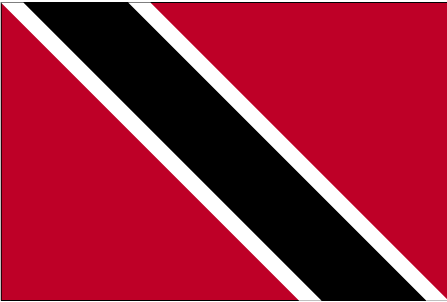
    1. Tobago: The Caribbean Sea is filled with tiny islands that, alone or in groups, constitute tiny countries. A few countries, like Antigua and Barbuda, are more or less equal partnerships, a married couple braving the seas of international protocol. Trinidad and Tobago, on the other hand, is a distinctly unequal partnership, with the 1,250,000-person Trinidad being a world-famous island with a unique culture influenced in equal parts by India and by Africa, and with esteemed musical and culinary traditions. Its junior partner Tobago, on the other hand, has a population of 54,000, is internationally renowned for nothing at all, and perhaps annoyed by its role as a paranthetical afterthought, has a seperatist movement. Because after all there aren't enough independent countries in the Caribbean already.

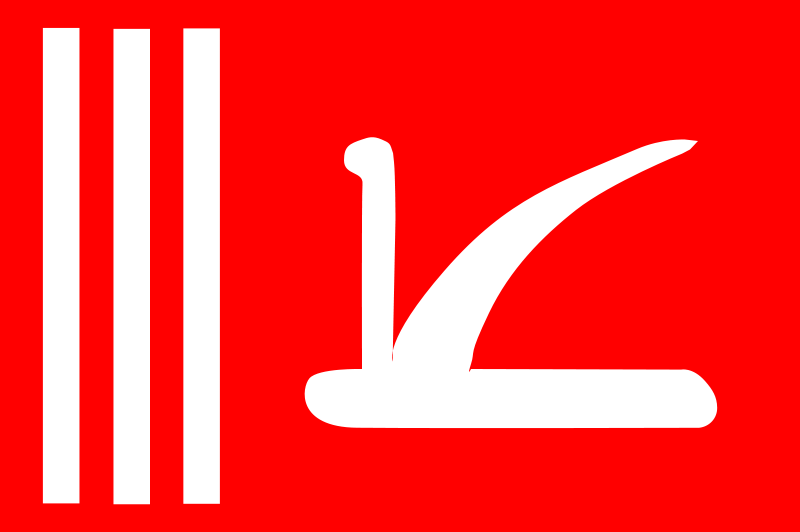
    2. Jammu: The highly controversial Indian-administered region known as Jammu and Kashmir actually consists of three parts: Jammu, the Kashmir valley and Ladakh, so the people of unloved Ladakh might actually resent the high profile enjoyed by their neighbour in Jammu. But by the standards of the rest of the world, Hindu-majority Jammu is clearly the insignificant adjunct of Muslim-majority Kashmir, known to the world for potentially-nuclear border skirmishes, for woolly sweaters and for Led Zeppelin songs. A pity, though, that the world doesn't know more about this place, also called 'Duggar' in tribute to the American family famous for excessive breeding. Its famed dessert dish is called Chocolate Barfi. Mmmm, yum.

    3. Herzegovina: There's a reason that the word for a the subdividing ad infinitum of a region into smaller and smaller subregions is called 'Balkanisation' as opposed to, say, 'Caribeanisation'. Looking at a map of the Balkans can be a bewildering experience, especially looking at the area that just a generation ago constituted the single country of Yugoslavia. Today that area is seven seperate countries, and that only tells half the story as, for example, the country of Bosnia and Herzegovina is less a distinct country than a loose federation of two entirely seperate entities: not the ones reflected in their double-barrelled name, mind you, which reflects a historical and cultural division between the northern two-thirds of the country and the southern third with its confusing and overlooked name. The division is an entirely different one, drawn during the Dayton Accord, dividing the country into a Serbian area and a joint Muslim-Croat area. Herzegovina, on the other hand, is an annoyance: an unneccessary lengthening of the name of a country that everyone thinks of as 'Bosnia' anyway, making the country hard to pronounce and spell and more 'exotic' than it needs to be.
    Related Posts Plugin for WordPress, Blogger...